
Microplastics: are they the health threat the media says...
Let's put this into perspective

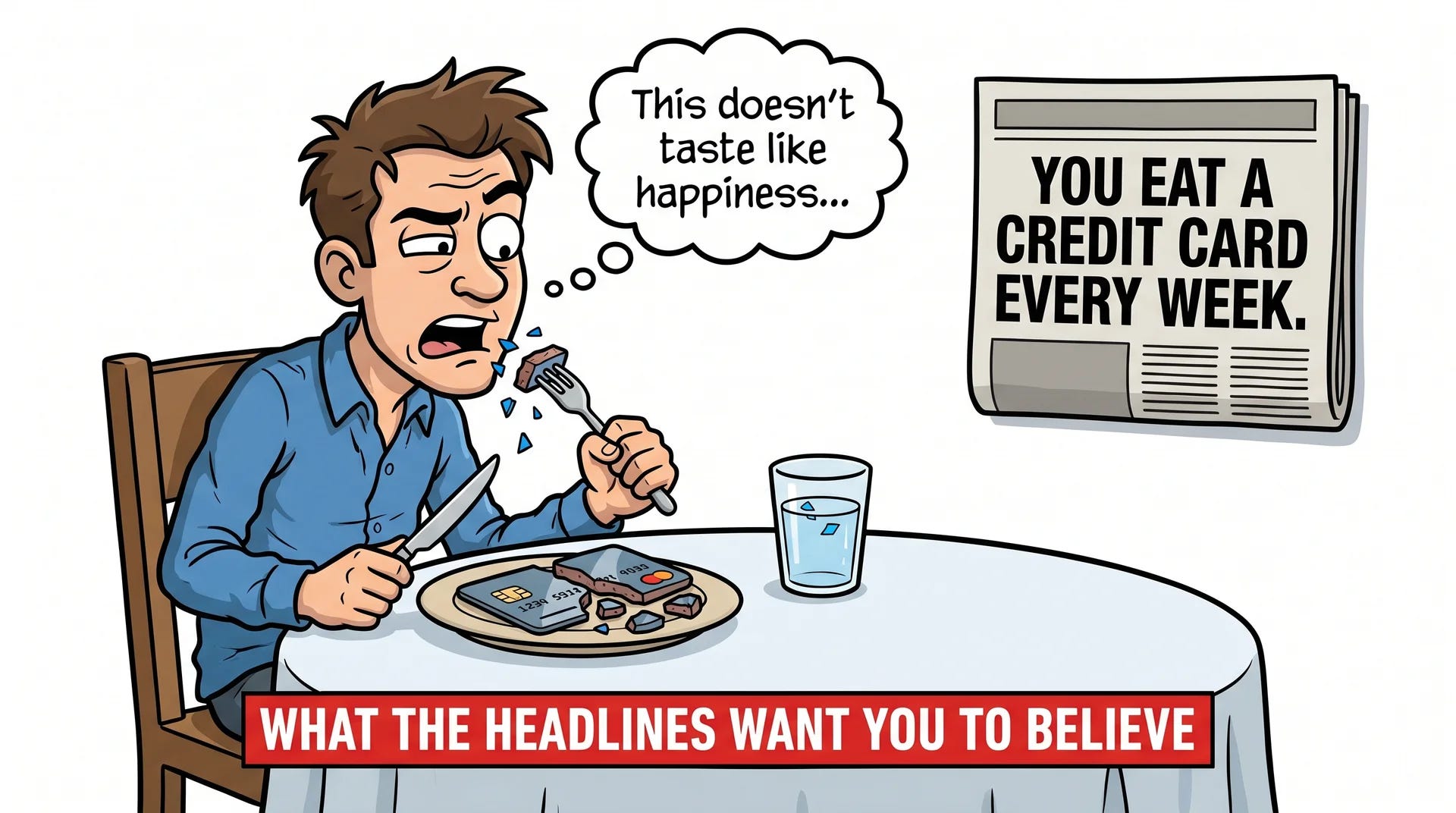
You have heard, probably more than once, that you eat a credit card’s worth of plastic every week.
It is a great headline.
It is also, almost certainly, wrong. Unless you are putting credit cards on your plate and eating them. Don’t do this...
I want to take what may be an unpopular position.
I am not telling you microplastics are good.
I am not telling you to drink hot coffee from a polystyrene cup or to microwave your food in a plastic tray.
Don’t do those things.
But I think the microplastics panic has gotten way out of proportion to the actual evidence...
...and I think it is distracting men from the daily lifestyle choices that would actually move the needle on their health.
I think this is super important because if there’s just too many overwhelming things that we have to do or remember, we just don’t do any of them.
We just go, Oh screw it. I’ll just take my chances and I’m not going to worry about it.
And then we miss chances of reducing risks that are very reasonable because we’ve just given up.
That’s why I think it’s important to realize the perspective on microplastics is very overblown.
Let me walk you through why.
What Microplastics Actually Are
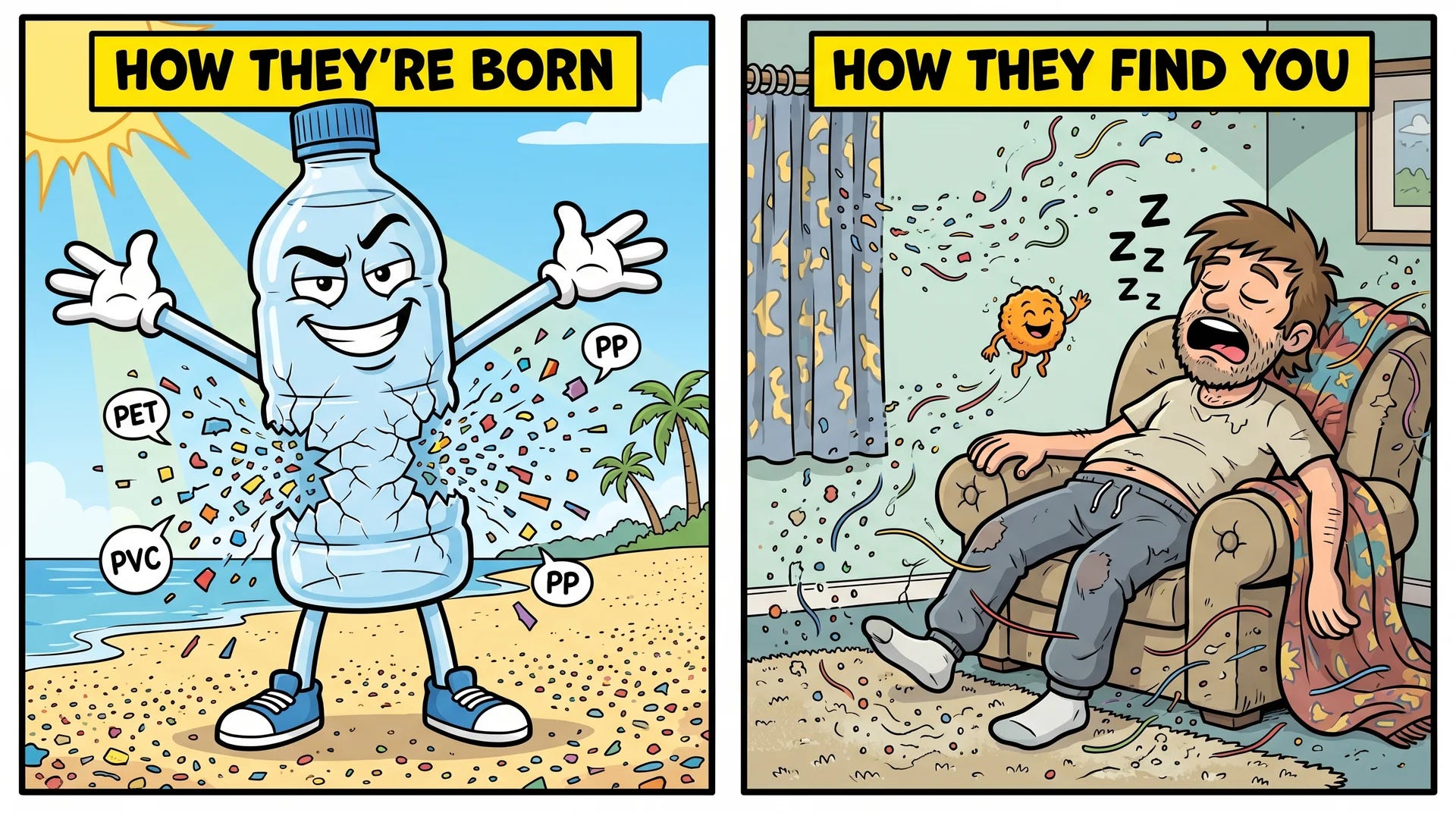
Microplastics are tiny pieces of plastic.
They are generally defined as smaller than about a fifth of an inch across — that’s five millimeters.
The smallest ones go down to the nanometer range.
Particles thousands of times smaller than the width of a human hair.
They come from two main routes.
The first is plastic objects breaking down.
Water bottles photodegrading in sunlight.
Fishing nets shredding in seawater.
Tires shedding microscopic particles on the road.
Polyester clothing sloughing fibers into your washing machine and into the dust in your house.
The second is plastic products manufactured small to begin with — exfoliating microbeads (mostly banned now), industrial pellets, paint chips, additives.
The polymers involved are mostly the same handful — polyethylene, polypropylene, polyester (PET), polystyrene, polyvinyl chloride.
Some pass through you. Some end up in your bloodstream. Some end up in tissue.
That much is real.
Now: what they do once they are in you is a much messier question than the headlines suggest.
Where Do Your Microplastics Actually Come From
Take a guess at the biggest source of microplastic exposure for the average person.
If you said water bottles, you would be wrong.
The single largest source for most modern men, by mass, is the air.
House dust.
Office dust.
The shedding fibers from synthetic carpets, synthetic clothing, synthetic upholstery, the fleece blanket on your couch, the polyester sheets you sleep on.
You inhale these all day.
Number two is food packaging — but specifically heat-stressed plastic.
The plastic deli container with hot soup poured in.
The microwaved leftover bag.
The plastic-lined paper cup of steaming coffee.
Cold storage in plastic is dramatically lower exposure than hot or warm storage.
Number three is bottled water — particularly water bottled in soft plastic and stored warm.
Number four is tea bags.
Many “premium” pyramid tea bags are made of nylon or PET mesh.
Steeping at around 200 degrees Fahrenheit for five minutes releases microplastics directly into the cup.
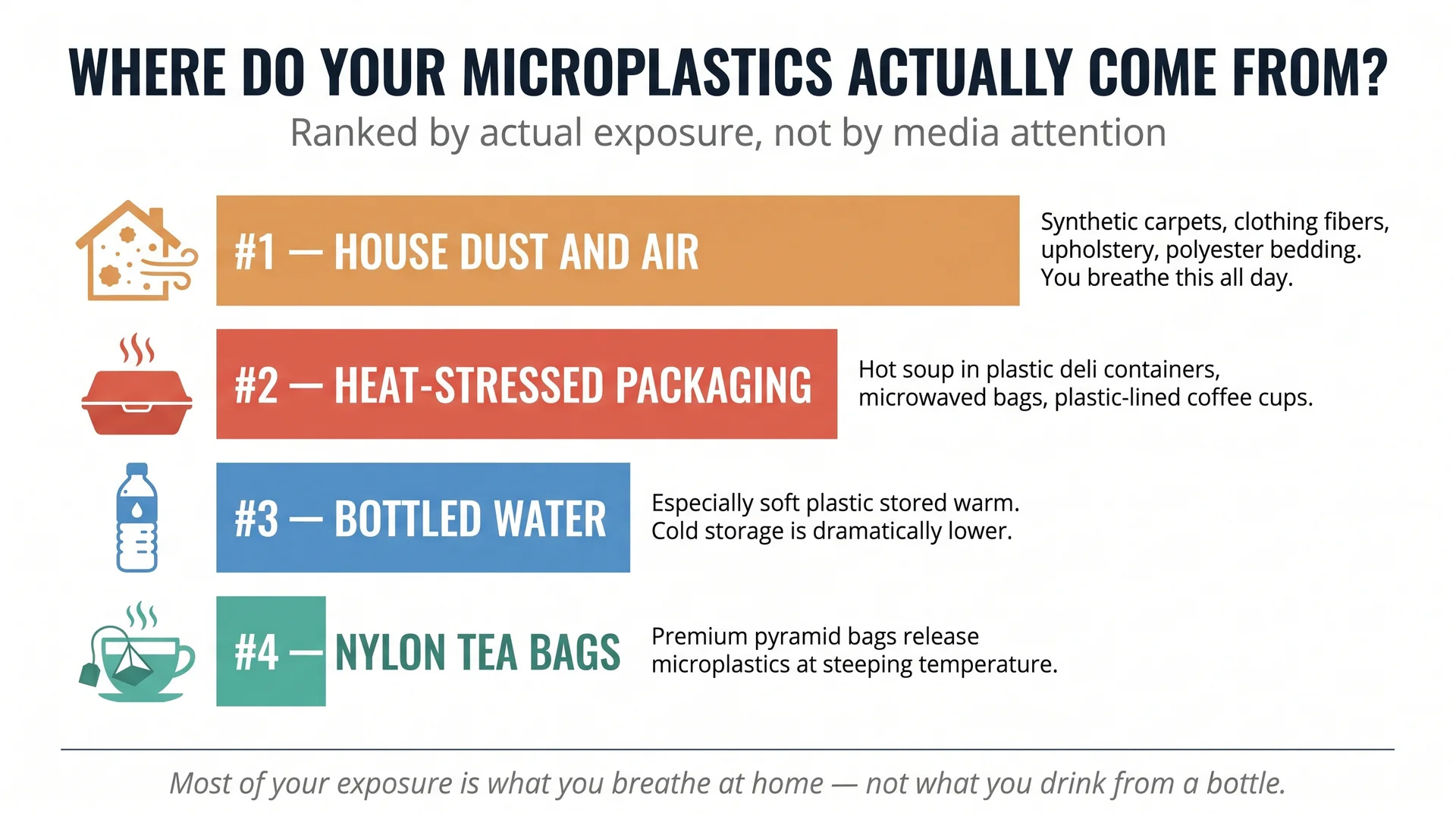
A 2023 review in Environment International by Zuri and colleagues mapped out these pathways in detail.
So most of your exposure is from breathing dust in your own home and using plastic at heat. Not the things people panic about most.
The Credit Card Per Week Story
Now the headline.
The “credit card per week” claim comes from a non-peer-reviewed report commissioned by the WWF in 2019 that estimated humans ingest around 5 grams of microplastics weekly — roughly the mass of a credit card.
That headline traveled around the world.
What is rarely mentioned is what happened next.
The actual peer-reviewed paper came out in 2021.
Senathirajah and colleagues, in the Journal of Hazardous Materials.
They gave a range of 0.1 to 5 grams per week.
Read those numbers.
The high end of that range is the credit card.
The low end is one fiftieth of that — about 50 times less.
The bottom end of the range is a plastic crumb the size of a sesame seed.
The actual scientific estimate is a 50-fold uncertainty range, and the press picked the worst end and called it the answer. Maybe.
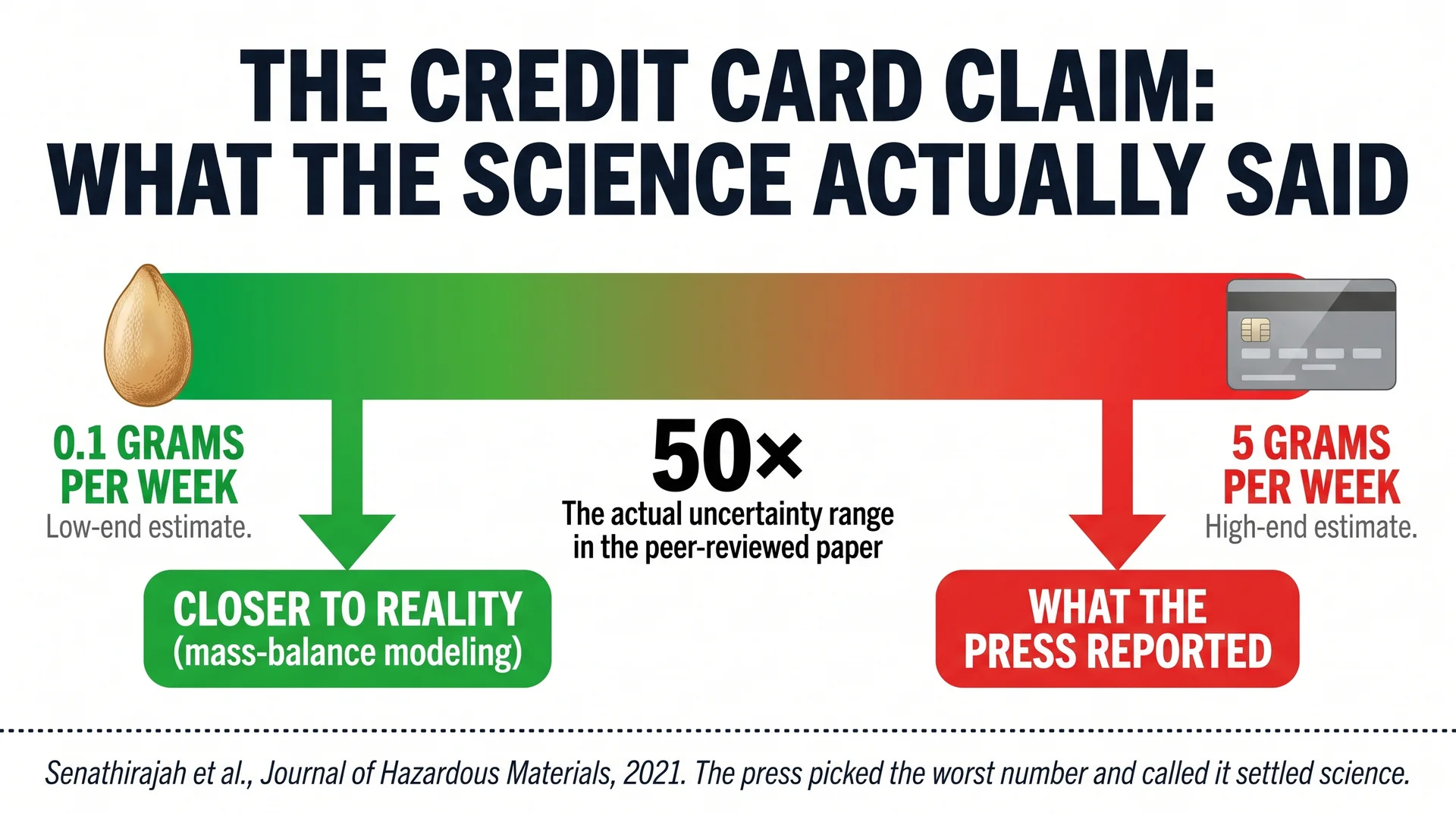
Subsequent analyses used mass-balance modeling.
That is the kind of accounting that follows microplastics through the body using known absorption and excretion rates.
They suggest the realistic ingested mass is closer to the bottom end of that range, not the top.
Most of what enters your mouth passes through and exits in stool. Only a small fraction gets into tissue.
It is not zero. It is not nothing. But it is not a credit card.
The Brain Study and the Plaque Study
Two studies are mostly responsible for the recent panic wave.
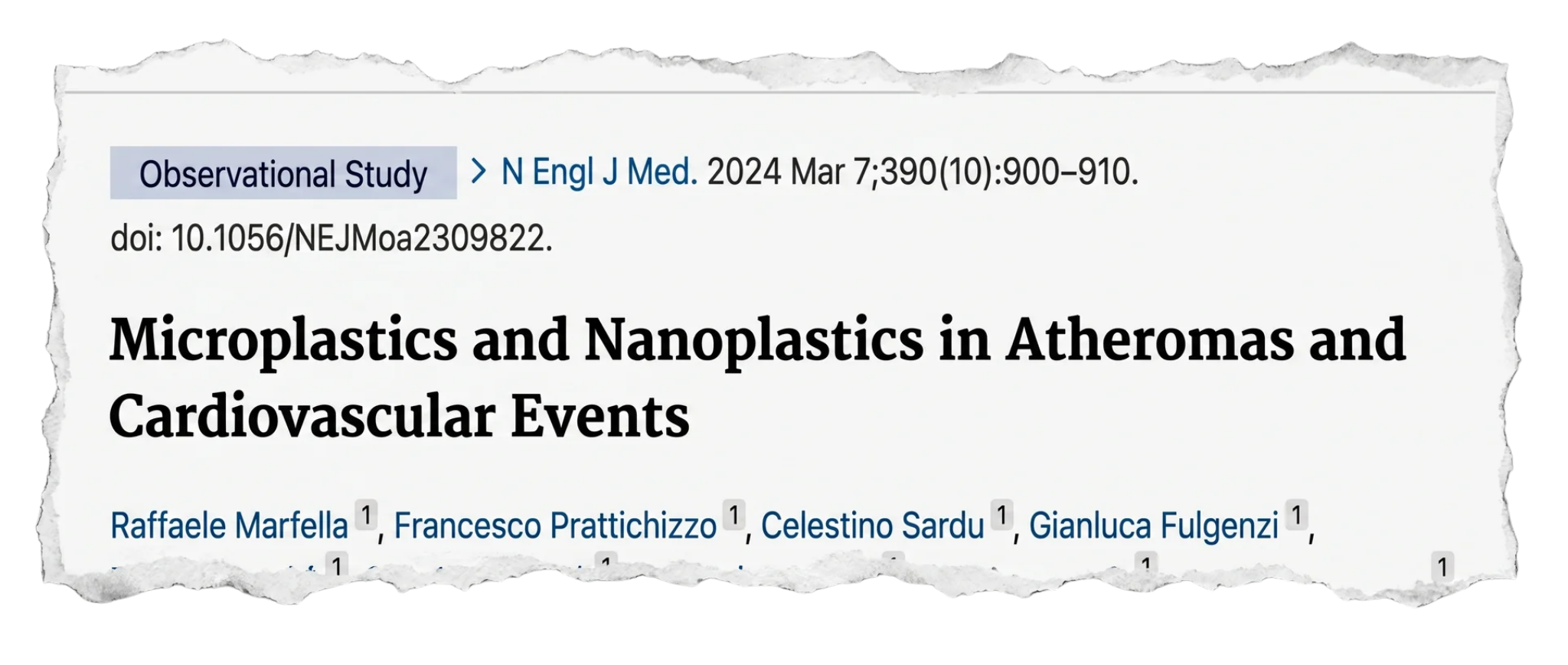
The first is Marfella and colleagues in the New England Journal of Medicine in 2024.
They examined 257 patients undergoing surgery to clean out their carotid arteries — the big arteries in your neck.
They found detectable microplastics in the plaque of about 58 percent of these arteries.
Over the following 34 months, the patients with detected microplastics had roughly 4.5 times higher risk of heart attack, stroke, or death.
A real study. A real signal. Published in the top medical journal in the world.
But let me tell you what that study did not show.
It did not show that microplastics caused the heart attacks, stroke or death.
It showed that patients whose plaque contained detectable microplastics had worse outcomes.
But here’s the problem with that.
Patients with more advanced disease have older, more porous plaque, and they have more inflammation.
Sicker plaque holds onto more particles of all kinds.
The microplastics may be a marker of sicker plaque, not the cause of sicker plaque.
The authors acknowledged this directly. The press did not.
The second is Nihart and colleagues in Nature Medicine in 2025.
They examined brain tissue from deceased people.
They found measurable microplastic and nanoplastic accumulation.
The concentrations were several times higher than in liver or kidney from the same people.
The brain has more plastic per gram than the rest of you.
Again — a real finding. Real signal.
But detection of plastic in brain tissue is not the same as demonstrating that plastic in brain tissue causes any specific disease.
The next twenty years of research is going to be sorting that out.
In 2022, two of the most experienced particle toxicologists working on this published a review.
Wright and Borm, in Frontiers in Public Health.
They pointed out something important.
Current microplastic exposure levels are relatively low compared to total ambient particulate matter we have always inhaled.
Soot, road dust, silica, pollen, cooking fumes — humans have been breathing particulate matter forever.
Our lungs have machinery for it.
The macrophages in your lungs are designed for exactly this work.
That does not make any quantity of microplastics safe.
It does suggest that small amounts may be okay. We are living in a land of plastic. A world of plastic. So it would be good news if we could deal with the amount we’re getting and not freak out.
The Body’s Particle Clearance System
Here is something I think gets lost in the panic.
You have evolved alongside particulate matter for the entire history of mammals.
Coal smoke.
Forest fire ash.
Volcanic dust.
Pollen.
Mold spores.
Silica from blown sand.
Soot from cooking fires.
Particles of rubber from tire tread that wears out as cars drive and you inhale the particles walking on the sidewalk.
Good thing that the mammalian lung is a particle-handling organ.
And that the mammalian gut is a particle-filtering system.
Macrophages, mucociliary clearance, lymphatic drainage, biliary excretion. These are a sophisticated waste management system that keeps us healthy despite all the stuff we inhale.
Modern manmade particles add a new burden, yes.
But your body is not encountering “particles” for the first time. It is encountering a different particle mix.
The relevant question is not ‘is there any plastic in my body.’
The answer to that is yes.
There is also road dust. There is also soot. There is also silica. There is also pollen. There is also old coal smoke from your grandfather’s furnace.
All of it lives in your tissue too.
And as I mentioned a moment ago, where do you think worn out automobile tires end up?
The tread wears off your car, where does that worn off tread end up?
It ends up on the roadside, it ends up in the air, it ends up inhaled.
We’ve been dealing with industrial plastic and rubber particles for at least a hundred years.
The relevant question is: how big is the additional burden, what does it do, and what fraction can you reasonably reduce?
Quick break
If this article is making you think, please hit the like button to help the algorithm know this is good content.
Now, next thing, restack it, create a Note on Substack showing that you like this. Others will see it. Thank you!
And finally, send it to a friend who might be calmer after reading it...
...and drop me a comment with your thoughts.
It is how this newsletter grows. And it makes me more motivated!
The Chemicals That Are Actually Worth Panicking About
Here is where the public confusion gets really thick.
When most people say “microplastics,” they often mean two completely different things, conflated.
One: the physical particles of plastic in their tissue.
Two: the plasticizer and stabilizer chemicals that leach OUT of plastic and into food and water — phthalates, BPA, BPS, PFAS.
These are very different!
Hint: the chemical leaching is much worse than the particles.
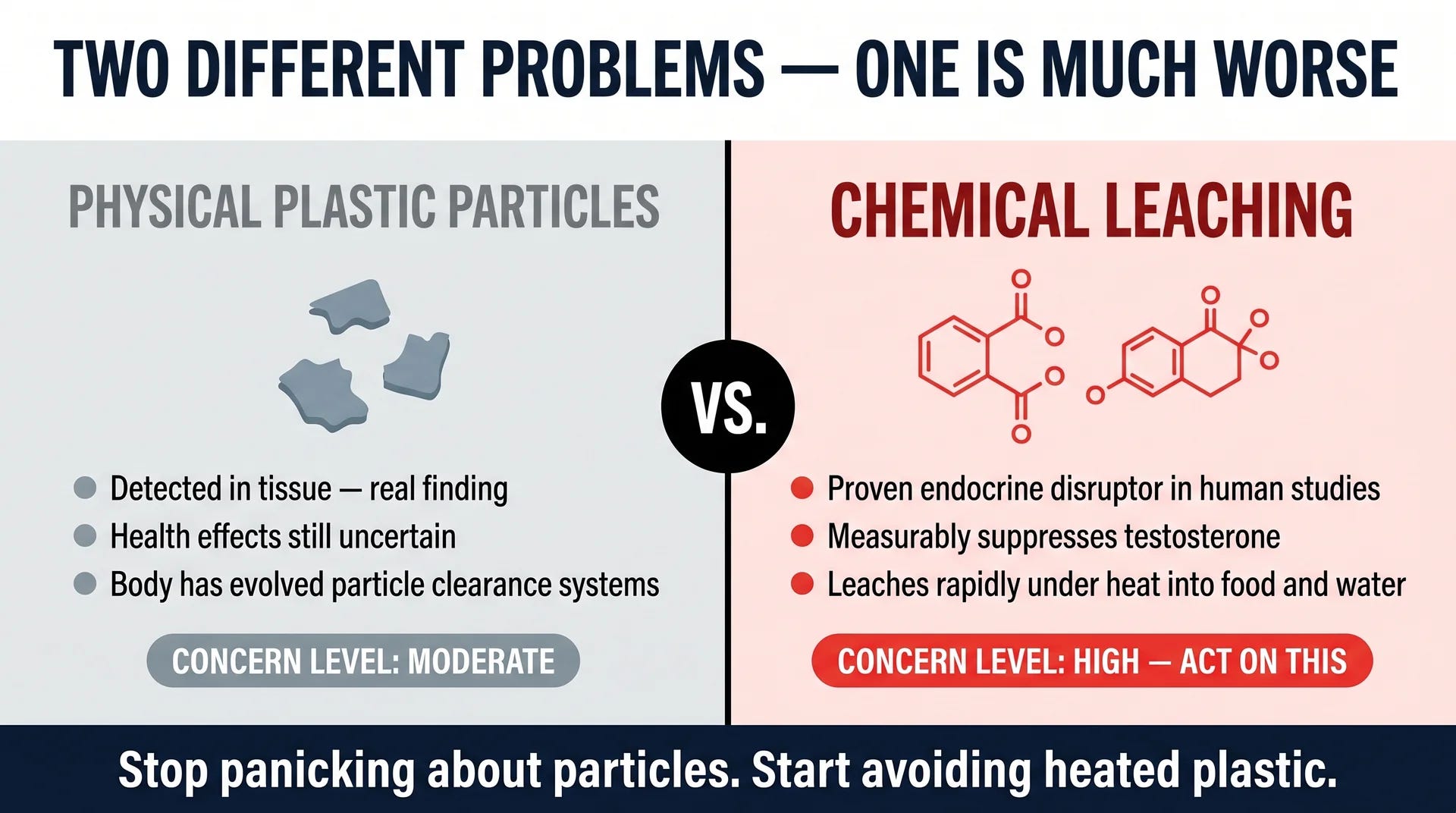
Phthalates — particularly DEHP and DBP — are well-documented endocrine disruptors.
They are added to soft plastics to make them flexible.
They leach out particularly under heat.
I’ve been warning you about them for the past eleven years
A 2015 paper by Pan and colleagues in 1,066 Chinese men of reproductive age found measurable associations between urinary phthalate metabolites and disturbed reproductive hormone profiles.
A 2024 paper in Environmental Health & Sustainability found DEHP exposure was associated with significant hormonal changes in reproductive-age men.
A 2022 study by Källsten and colleagues showed DBP impaired steroid hormone biosynthesis in cell models.
These are not “I detected plastic in tissue” studies.
These are “this chemical, in measurable doses, demonstrably suppresses testosterone via known biochemical pathways” studies.
If you want to actually do something useful, this is where to focus. Not the physical plastic. The chemicals leaching from heated plastic.
BPA — bisphenol A — is the same story.
Replaced in many products by BPS, which probably has the same problem.
Most plastic-conscious consumers have switched to BPA-free containers that contain BPS, which research suggests is doing the same thing.
When men ask me what to actually do about “plastics,” this is what I tell them.
Worry about the leaching chemicals more than the particles.
Avoid heated plastic.
Glass and stainless steel for hot food and drinks.
Avoid water in plastic bottles. That plastic leaches out into the water, sometimes it even tastes plasticky
What You Can Actually Do — A Short List
This is the limited-options part of the conversation that nobody likes.
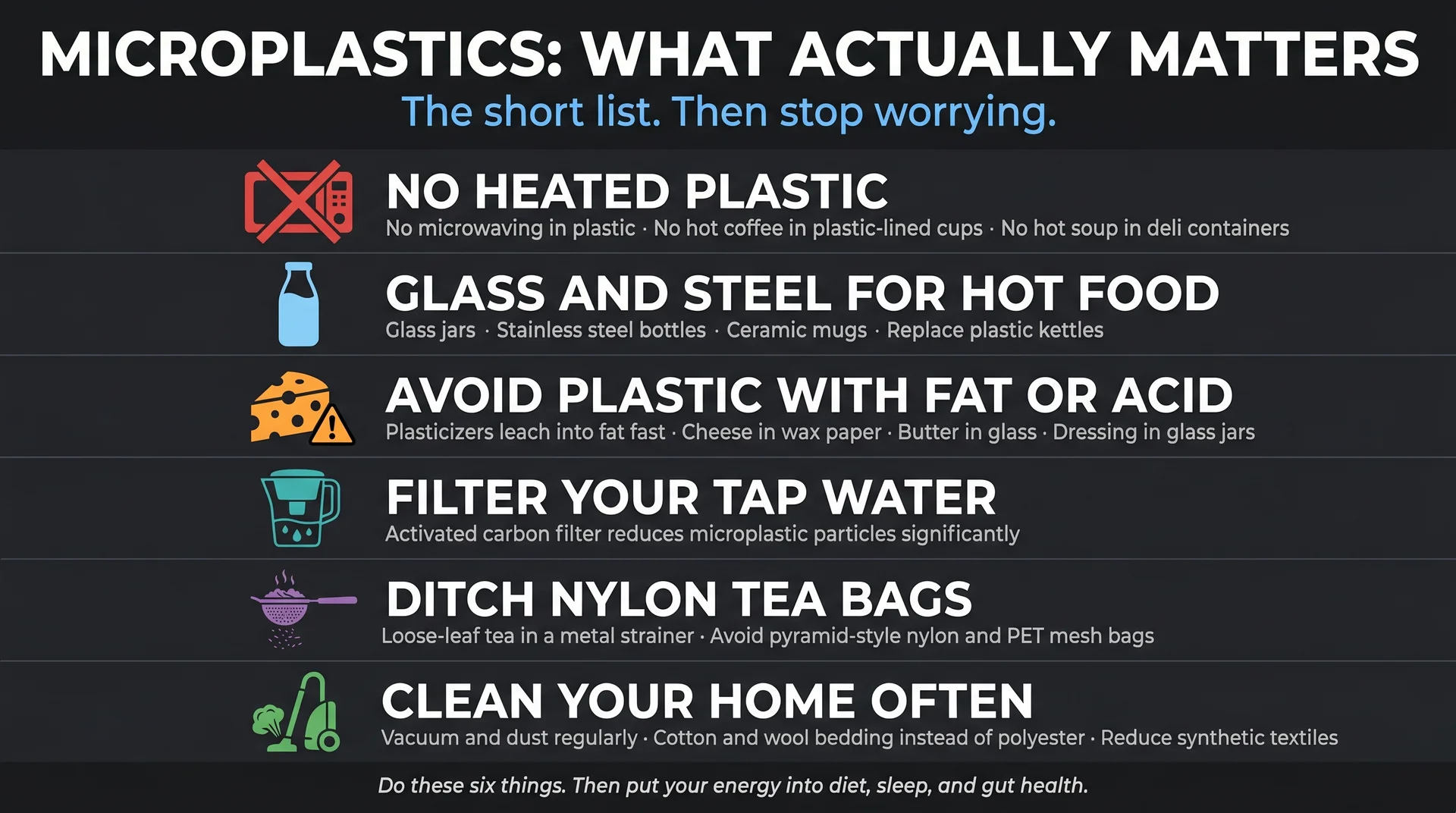
Don’t heat plastic.
No microwaving in plastic containers.
No hot coffee in plastic-lined paper cups.
No soup in deli containers that came out of the soup well.
No hot water through plastic kettles or plastic coffee makers.
Replace where you can with glass, stainless steel, or ceramic.
Avoid soft plastic for fatty or acidic foods.
Plasticizers leach into fat much faster than into water.
Cheese in plastic wrap, butter in plastic tubs, salad dressing in plastic — these are higher-exposure than they seem. Glass jars and wax paper are the cheap upgrades.
Use glass water bottles. Stainless steel is okay too. Reuse them. The problem starts when a plastic bottle sits in a hot car or in a delivery truck that isn’t air conditioned.
Filter your tap water if you can. A decent activated carbon filter pulls down microplastic particles considerably.
Avoid pyramid-style nylon or PET tea bags. Switch to loose-leaf in a metal strainer.
Wash and vacuum often. Most of your daily microplastic exposure is house dust from synthetic textiles.
A clean home is a lower-exposure home.
Cotton and wool clothing and bedding shed natural fibers instead of plastic ones.
My wife and I use high quality cotton sheets. And I don’t wear polyester.
Outside that list — your influence drops off rapidly.
The atmospheric microplastic load, the agricultural soil microplastic load, the food chain microplastic load — these are policy problems, not personal ones.
Don’t use those cheap face masks either. Those are really bad. They’re just full of plastic particles.
You cannot opt out of the atmosphere.
Using one less bottle of water per week is fine.
Spending a hundred dollars a month on “detox” supplements that “remove microplastics” is, in my view, a waste of money.
The marketing industry has noticed the panic and is monetizing it.
What You Should Actually Panic About Instead
Here is the contrarian point that matters most.
If you are eating polyunsaturated seed oils at every restaurant meal, your body is generating oxidative damage at a rate that dwarfs any plausible microplastic contribution.
I have written about this a hundred times.
If your gut is leaking bacterial endotoxin into your bloodstream all day every day — as I wrote about in my last article on endotoxin — that inflammatory burden alone is enormous.
Much greater than what any reasonable amount of plastic in your tissue is doing.
By orders of magnitude.
If you are taking an SSRI for low mood, look at the SSRI literature I just wrote about.
The dementia and bone-loss signal there is a far larger threat to your healthspan than the plastic in your carotid plaque.
If you are sleeping six hours a night, the inflammatory and hormonal cost of that is, again, much larger than your microplastic exposure.
If you are 40 pounds overweight, the metabolic burden of that is enormous compared to the plastic burden.
The microplastics panic has a kind of beautiful psychological trick built in.
It is somebody else’s fault.
The corporations did it.
The atmosphere did it. The municipal water did it. There is nothing you could have done.
The seed oil problem, the leaky gut problem, the bad sleep problem, the SSRI problem — those are mine to fix. And nobody likes that.
It is much easier to be angry about microplastics than to skip the fried chicken sandwich and go to bed at ten.
Maybe you can help me think about it differently. But I keep coming back to the same conclusion.
The men I coach who actually move the needle on their health are not the ones who switched to glass water bottles.
They are the ones who fixed their diet, fixed their sleep, fixed their gut, fixed their stress, and walked daily.
Their microplastic intake probably went down too — but that was a side effect, not the main move.
A coaching client of mine spent six months panicking about microplastics.
He read every paper, bought every glass container, replaced every cutting board. His testosterone did not move.
He fixed his cooking oil — was soybean. His sleep — five hours, broken. His bowel movements — twice a week. We fixed the actual problems. Six months later his testosterone was up by 250 points. He had not changed his microplastics situation at all.
I have a folder of these stories.
The Bigger Picture
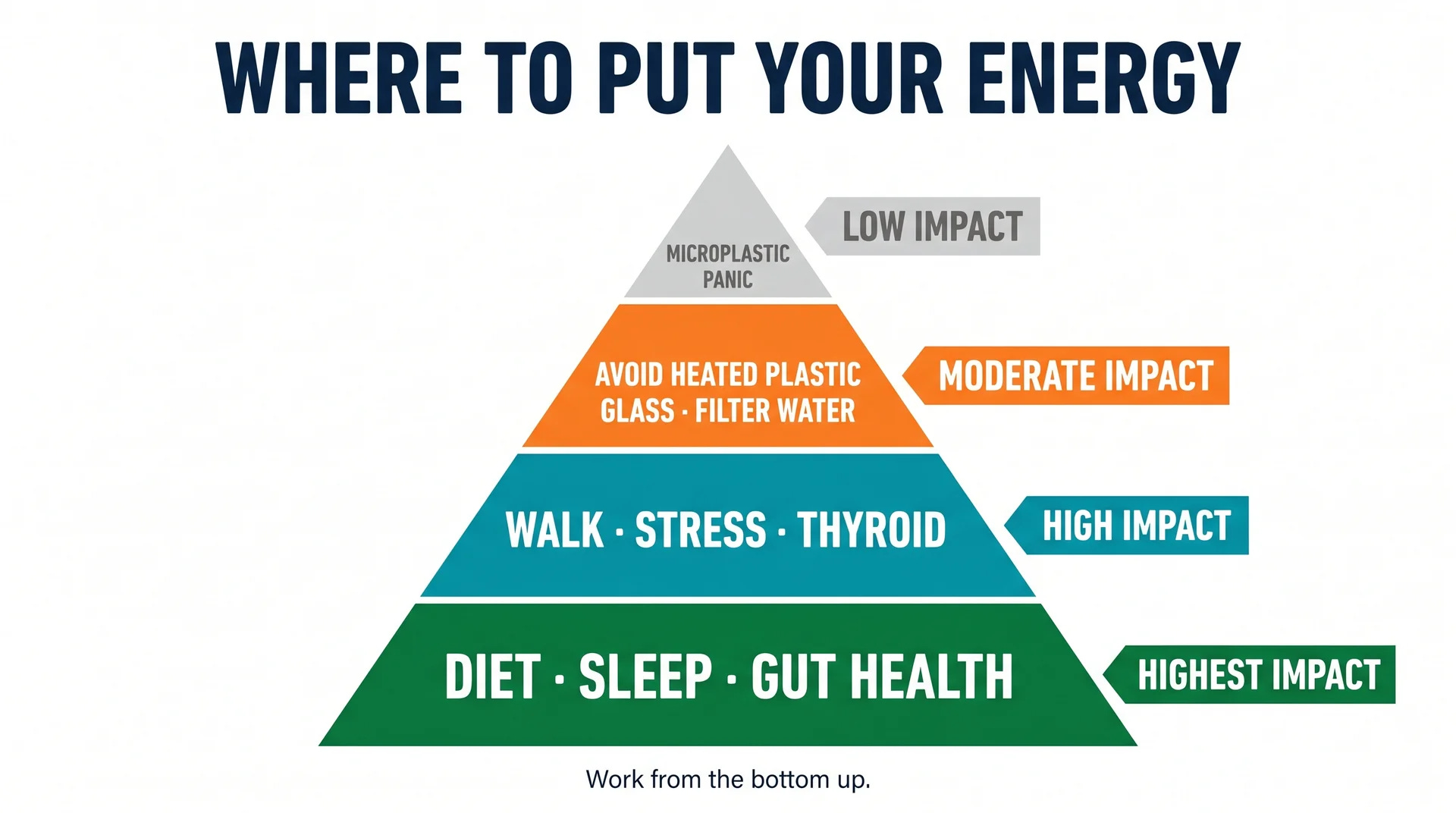
I am not telling you to stop caring about microplastics. I am telling you that the rank of microplastics in your personal health priority list is probably much lower than the panic suggests.
The evidence for harm in real human populations is much weaker than the evidence for harm from seed oils, endotoxin, chronic stress, or sleep loss.
The dose-response is poorly understood. The detection in tissue is not the same as causation of disease. The “credit card per week” headline was sensationalism, not science.
Do the easy avoidance moves — no heated plastic, no plastic with hot drinks, use glass at home, vacuum your floors.
Then put your real energy into the things that actually move your healthspan.
Have I been right all along?
I will let your morning wood, your hip flexibility, and your mental sharpness in twenty years be the test.
And: If you want to know where your vascular and erection health is, and what you can do about it, take this quiz now: https://mensworldjournal.com/of/t-9.php
Citations
1. Senathirajah K, Attwood S, Bhagwat G, Carbery M, Wilson S, Palanisami T. Estimation of the mass of microplastics ingested — a pivotal first step towards human health risk assessment. Journal of Hazardous Materials. 2021. PMID 33130380. https://pubmed.ncbi.nlm.nih.gov/33130380/
2. Marfella R, Prattichizzo F, Sardu C, et al. Microplastics and nanoplastics in atheromas and cardiovascular events. New England Journal of Medicine. 2024. PMID 38446676. https://pubmed.ncbi.nlm.nih.gov/38446676/
3. Nihart AJ, Garcia MA, El Hayek E, et al. Bioaccumulation of microplastics in decedent human brains. Nature Medicine. 2025. PMID 39901044. https://pubmed.ncbi.nlm.nih.gov/39901044/
4. Wright SL, Borm PJA. Applying existing particle paradigms to inhaled microplastic particles. Frontiers in Public Health. 2022. PMID 35712293. https://pubmed.ncbi.nlm.nih.gov/35712293/
5. Polimeni A, Castiello DS, Quarta R, et al. Microplastics and nanoplastics in cardiovascular disease: an emerging cardiovascular risk factor. Cardiovascular Toxicology. 2026. PMID 41968227. https://pubmed.ncbi.nlm.nih.gov/41968227/
6. Zuri G, Karanasiou A, Lacorte S. Microplastics: human exposure assessment through air, water, and food. Environment International. 2023. PMID 37607425. https://pubmed.ncbi.nlm.nih.gov/37607425/
7. Yang T, Wang J. Exposure sources and pathways of micro- and nanoplastics in the environment, with emphasis on potential effects in humans: a systematic review. Integrated Environmental Assessment and Management. 2023. PMID 36661032. https://pubmed.ncbi.nlm.nih.gov/36661032/
8. Pan Y, Jing J, Dong F, et al. Association between phthalate metabolites and biomarkers of reproductive function in 1066 Chinese men of reproductive age. Journal of Hazardous Materials. 2015. PMID 26296076. https://pubmed.ncbi.nlm.nih.gov/26296076/
9. Li X, Xiao C, Liu J, et al. Di(2-ethylhexyl) phthalate exposure with reproductive hormones in the general population. Environmental Health (Washington). 2024. PMID 39568700. https://pubmed.ncbi.nlm.nih.gov/39568700/
10. Källsten L, Pierozan P, Martin JW, Karlsson O. Di-n-butyl phthalate and its monoester metabolite impairs steroid hormone biosynthesis. Cells. 2022. PMID 36230992. https://pubmed.ncbi.nlm.nih.gov/36230992/