
Why your triglycerides are high
And how to bring them down without drugs

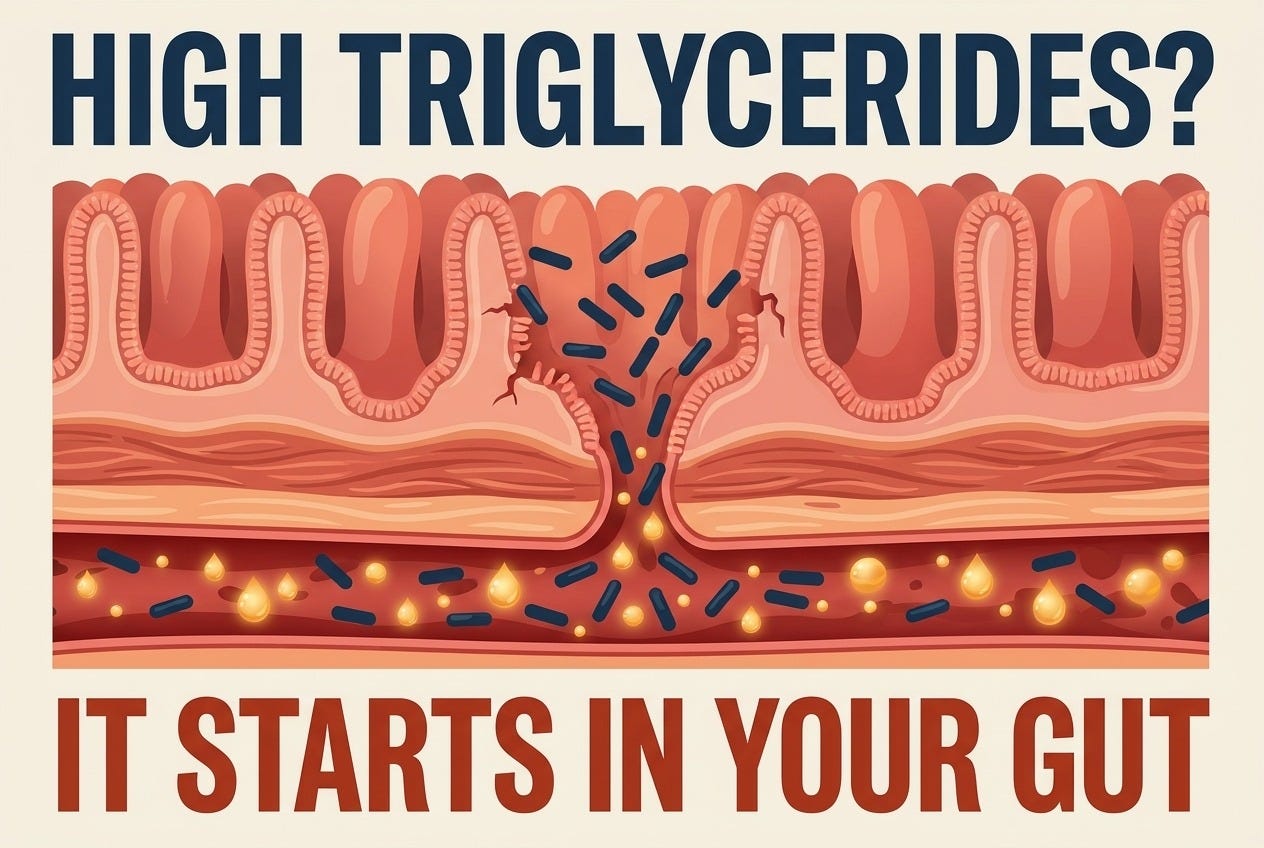
I see people’s lab work quite a bit, and one student recently had triglycerides of 380.
His doctor circled the number, told him to cut back on fat, and recommended niacin.
Nobody asks the real question.
Why are triglycerides so high?
I’m going to give you a very novel answer for that now.
Everybody assumes they know the answer. It is on your plate. The butter, the steak, the fried stuff. You’re too fat. You don’t move enough.
That has actually been measured, in living people, and it is wrong.
So what are triglyercides?
They’re a form of fat that can be dissolved in your bloodstream.
If you have high triglycerides, that’s the same thing as saying you have a lot of fat in your bloodstream.
But why do people have so much fat in their bloodstream?
And how does this tie into having fat in your liver? Because it does.
Elizabeth Parks spent her career on one stubborn question — when a person’s liver fills up with fat, where did that fat physically come from? Not in theory. Actually.
So she and a researcher named Kerry Donnelly took nine patients whose livers were already fatty, fed them fatty acids carrying a chemical tag they could track, and then read the tags in the liver tissue like return addresses.
Nine people is a small study, and all nine already had fatty livers. Hold that in mind. But before this, nobody had measured it in a living human at all.
59 percent of the fat had leaked out of the patients’ own fat cells.
26 percent the liver had built out of sugar.
Only 15 percent was from dietary fat.
That is the fat sitting in the liver. They also measured the fat the liver was packaging up and shipping OUT into the bloodstream.
Same answer. 62 percent from the men’s own fat cells, 23 percent built from sugar, 15 percent from food.
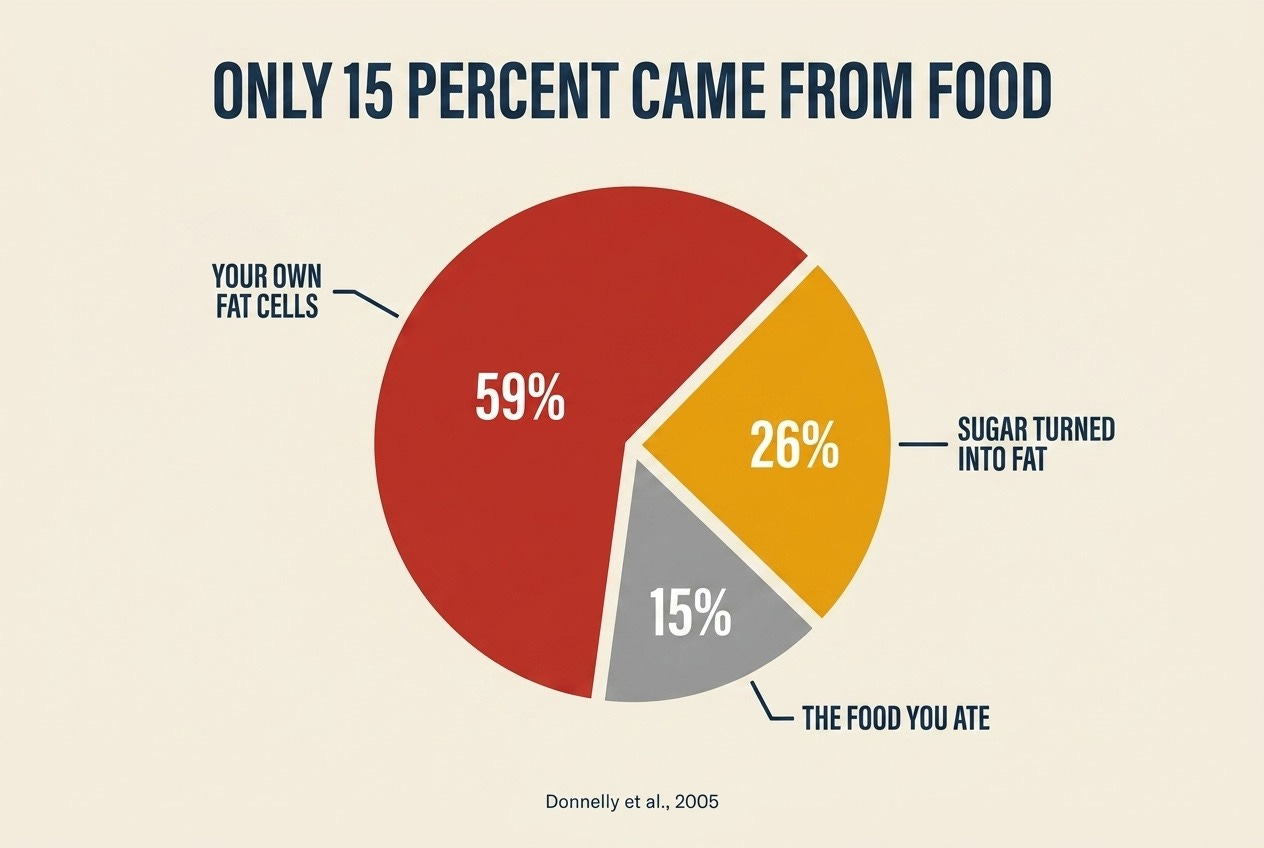
So the fat floating in your blood is mostly your own fat, coming back out of storage.
Which means a high triglyceride number is not a diet problem. It is a leak.
Your fat cells have a door. Insulin closes it. Something is holding it open all day long.
And it is not what your doctor thinks it is. It is a stress signal that never switches off — and it starts in your gut.
That is this article. How the leak gets started, what it is costing you, why the pill they hand you cannot fix it, and the seven things that close the door.
Keep reading with a 7-day free trial
Subscribe to Daily Medical Discoveries to keep reading this post and get 7 days of free access to the full post archives.